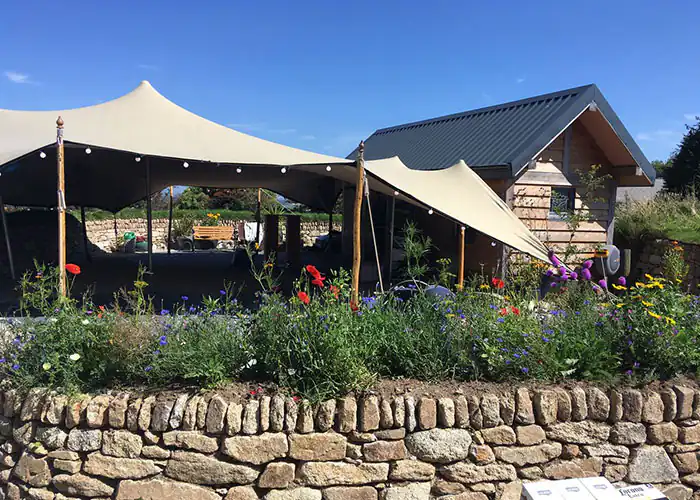
The primary advantage of adding a stretch tent to an existing building is the seamless expansion of usable space. Unlike traditional marquees, stretch tents are made from highly elastic, waterproof fabric that can be rigged directly into a building’s fascia or roofline.
- Atmospheric Versatility: They provide an “indoor-outdoor” flow that customers crave. The organic, flowing lines of the fabric soften the harsh angles of modern masonry, creating a curated, high-end atmosphere.
- Climate Control: Modern stretch fabrics offer high UV protection and thermal insulation. By attaching one to a building, you create a buffer zone that keeps the interior cooler in summer and provides a wind-shielded, heated area in winter.
- Speed and Cost-Effectiveness: Extending a building with bricks and mortar can take months and cost tens of thousands. A stretch tent can be installed in a day and offers a comparable ROI through increased footfall and capacity.
Which Businesses Benefit Most?
While any property can technically host a stretch tent, three specific sectors see the most significant transformation:
1. Hospitality (Pubs, Restaurants, and Cafés)
For the hospitality industry, “covers” equal revenue. A stretch tent allows a venue to turn a seasonal terrace or a neglected courtyard into a year-round dining room. By adding side-walls and heaters, a restaurant can double its seating capacity regardless of the weather.
2. Wedding and Event Venues
Venues often face the “flip” challenge—moving guests from a ceremony room to a dining hall. A stretch tent attached to the main hall provides a stylish transition space for champagne receptions, preventing guests from feeling cramped or exposed to the elements.
3. Corporate Offices and Co-working Spaces
Post-pandemic, “third spaces” for collaboration are in high demand. An rooftop stretch tent on an office building provides a breakout area for employees to work in fresh air, which has been shown to boost productivity and mental well-being.
Key Factors to Consider
Before installing a stretch tent, several logistical and safety factors must be evaluated to ensure the structure is an asset rather than a liability.
- Fixing Points and Structural Integrity: The “stretch” in a stretch tent comes from high-tension rigging. When attaching to a building, the masonry must be surveyed to ensure it can handle the lateral pull. Heavy-duty eyelets or chemical anchors are usually required.
- Drainage and “Run-off”: One of the biggest mistakes is failing to account for rainwater. If the tent is flush against a building, you must ensure the water runs away from the foundations and doesn’t “pool” in the fabric. Custom guttering systems can often be integrated between the tent and the wall.
- Regulations and Permissions: While often classed as temporary structures, semi-permanent installations may require planning permission or fire safety certification. Always ensure the fabric is fire-retardant (B1/M2 certified) and complies with local building codes.
- Maintenance: Being exposed to the elements means the fabric will require periodic cleaning and tension checks. Unlike a roof, fabric moves; a maintenance contract with the installer is usually a wise investment.
Conclusion
Adding a stretch tent to a building is more than just a “tacked-on” extra; it is a strategic architectural move. It allows a business to adapt to the seasons, maximise its square footage, and create a unique aesthetic identity that sets it apart from the competition.
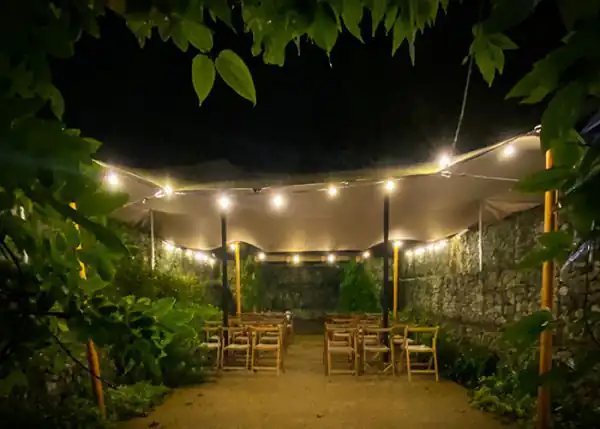
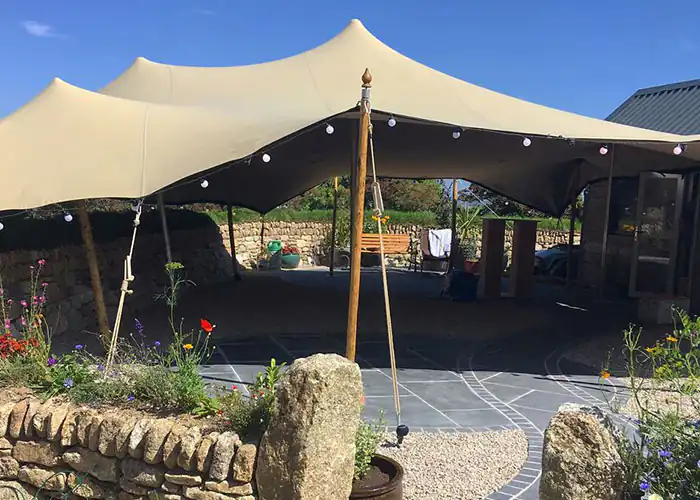
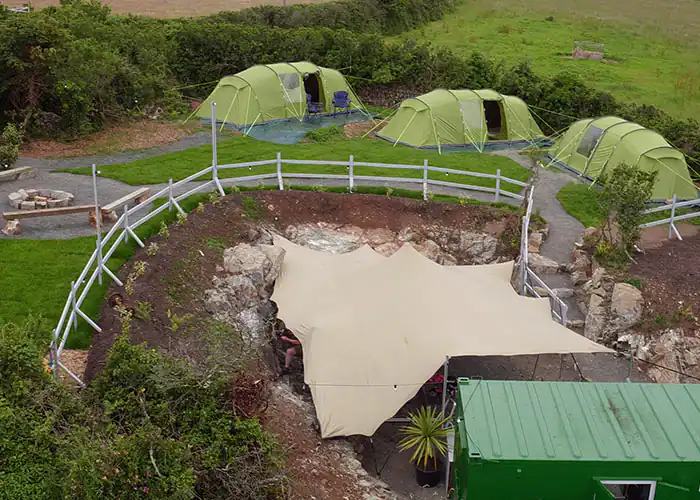
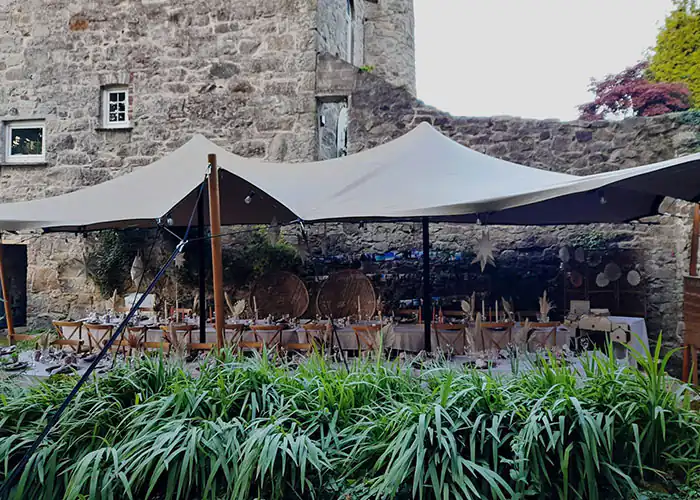
Below are some example of some of the installs we have done that attaches the tent to the building structure using eyebolts.